Tuesday, June 12, 2012

I finally got around to reading this YA dystopian book. So many people have told me how great it was. And while I was reading it, I could not pick it up without someone saying how amazing it was.
To be honest, I was a little under-whelmed. It did not grab me much at all. I really had a hard time relating to the characters in the first half of the book. And when the author described the "Pretties," I just could not wrap my head around how they could be at all attractive.

But I kept reading. I thought there had to be something to all of the hype that everyone was creating around this series. After about 150 pages, I kinda got it. Once Tally, the lead character who is an, "Ugly," leaves her comfortable home, I really started to identify with her and I started to root for her.

I also really liked the description of "the ruins." This is supposed to be our current world about 300 years into the future. It fascinates me to think about what people will think of us in the future. I think Westerfeld really made this come alive for me. I get a kick out of picturing our dystopian future.

I like even more when he starts to describe how it all happened. I want to know more about how our civilization came to destroy itself. I watched "Rise of the Planet of the Apes" last night and I got the same thrill. The thrill of knowing how an entire civilization can come to ruin.

Basically that is what this book is about. It is about how we, the human race, are so centered on what people look like that we took ourselves out. We ended up creating a world where everyone looks the same and thinks the same and acts the same. This is to take out any chance of ruining ourselves ever again.

So, while I was a little disenchanted at first by this book, by the middle, I was hooked. And now I can't wait to read the next one. I really hope it goes more in depth about the fall of our civilization. I look forward to seeing what the next book in the series has to offer. I am not committed to the characters quite yet, but I do look forward to seeing what they will be up to in the next installment, "Pretties."

Thursday, June 7, 2012

Column 20 How to be an American Housewife


            “How to Be an American Housewife,” by Margaret Dilloway, is a glimpse into the life of Shoko, a Japanese woman who marries an American soldier after World War II in an attempt to escape her bleak prospects: a life of manual labor and near-starvation patterned after the fate of her mother and the Japanese women before her.
            The book begins at the end of Shoko’s life and flashes back to the past, beginning with her dream of being a housewife to an American GI. She knows it will be a challenge to raise children in America and still incorporate traditional Japanese customs, but Shoko is an intelligent woman who feels that if anyone can make good on this dream she can. So she finds an American soldier to marry and brings two children into the world in the United States.
            The title of the book refers to a fictitious book that Shoko’s husband, Charlie, gives her to help her assimilate into American culture. There are snippets from this “book” at the beginning of each chapter. Dilloway explains in the author’s note that her own mother received a similar book that was a guide for Japanese brides marrying American men.
I found myself very interested in the customs of the Japanese while reading this book. I was interested in their religions and the way they eat. I thought it was interesting how they revere their male children more than their female children. They let their sons get away with everything and ask them to do nothing, while the girls are stuck with all of the work and are expected to be perfect.
 Somehow, the boys who are raised this way still have some kind of a work ethic. The daughters grow up pleasing their parents and becoming submissive wives.
But Shoko does not experience this with her children. She tries raising her son and daughter in this traditional Japanese manner in America and finds that she ends up with a lazy, full-grown man who lives with his parents well into his forties. Her daughter becomes a bitter, disenchanted single mother who wants nothing to do with the Japanese way of life.
Before she dies, Shoko wants to reconcile with her brother, who disowned her years before when she married an American. With her failing health, it is impossible for Shoko to travel to Japan for a reunion, so she sends her daughter, Sue, in her place. This trip reveals family secrets that change the way Sue views her mother and the world around her.
Told from the points of view of Shoko and her daughter, “How to Be an American Housewife” offers an intimate glimpse into the lives of this Japanese-American family. It is engaging and entertaining, and I did not want to put it down.
In particular, the story made me want to know more about the women who came over from Japan seeking a better life in America. Were they happy with their choice to come here? Is America what they expected? Would they have chosen to go back to Japan if they could?
I am also curious to know how much Japan has changed since that post-World-War-II era. Are there women in Japan who still want to leave their country to come to America to seek “a better life?” I would definitely like to read more about this subject and seek out other books by this author.

Friday, June 1, 2012

column 19


            One day you are volunteering at your child’s school as the cafeteria mom. It is the end of lunch and almost all of the children are outside on the playground except for three little girls who have been teasing your daughter and your daughter who has run into the bathroom. There is a sudden explosion from the kitchen. When you come to, you find the three children crying, covered in soot and ash. You know that you have to get the children out of the building, but your daughter is still in the bathroom across the cafeteria. What do you do?
            This is the beginning of the book “Save Me” by Lisa Scottoline. The decision this mother makes and how she executes her decision affect her life dramatically over the next few months and beyond.
            I know, it sounds intense. It is really intense, but so good! But the book doesn’t stop there. There is also a mystery involved, as there is with all of Scottoline’s books. We find out what caused the fire and why all of this affects the main character, Rose, so deeply.
            This book is an accurate portrait of just how far a mother will go to save the ones she loves. It is emotional, heartbreaking, and a thrill to read. Let me be honest, it is not some great intellectual piece of literature. But it was a quick, fun read.
            I have read all of Scottoline’s books. Most of them are law mysteries. They are about a lawyer who lives in Philadelphia who is constantly getting into trouble by being in the wrong place at the wrong time. I love these books. They are easy, fast, no-brainers. I started reading them because they all take place in Philadelphia, where I spent my elementary and junior high years. I love to read about the places that I am familiar with.
            I never expect more out of these books than to be entertained. They are entertaining. They grab me from the first chapter and make me want to read until I have finished the last page.
            But this book surprised me. It actually made me think a little. I was confronted with the “what would I do?” scenario. And I was curious, as well, as to how I would react if I had been the parent of one of the other children. How would I feel if there was a disaster at the school of my child? How would I react if my child had been seriously injured at school? Would I blame the school? There are also the legal ramifications. Would I want to sue someone?
            While this book might not be an American classic, it is a great way to escape your daily duties. It is a fun read—a wonderful “beach read.” (Does Rigby Lake count as “the beach?”)

Friday, May 11, 2012

Column 18 The Thirteenth Tale


Every once in a while I read a book that I can’t put down and I know I will want to read again. This was the case with “The Thirteenth Tale” by Diane Setterfield.
            One of the main characters of the book is Vida Winter, a fictitious famous author in England who has eluded biographers for fifty years, telling them only invented stories about her life and making up her past as she goes along. When she gets ill and learns that her life is fading, Winter turns to an amateur biographer, Margaret Lea, to trust to tell her life story from its eccentric beginning to its tragic end.
            Margaret is a bookish sort who has remained almost cloistered in her father’s bookshop all of her life, choosing to lose herself in the lives of the dead—through old books—rather than to foster relationships with the living.
            After receiving  a request from Winter to write her biography, Lea reads a rare copy of Winter’s “Thirteen Tales of Change and Desperation.” She is intrigued by the stories and rather confused when she finds that there are only twelve stories rather than thirteen. It is then that she wonders, “Where is the thirteenth tale?” And her curiosity leads her to agree to tell Vida Winter’s  “true” story.
            Winters tells her life story as would any novelist, insisting on beginning at the beginning and going to the end, with no deviations. Margaret records Winter’s account and begins her journey in finding out all of the family secrets of the Angelfield family, including the skeletons in the closet that continue to haunt them now.
            This story of Gothic suspense had me enthralled the minute I opened the first chapter. There are so many interesting characters and stories to try to figure out, that I did not want to stop reading. This book left me wanting more, but it wrapped up rather nicely in the end.
            The book is full of beautiful references to, and about, books. Margaret’s love of books is something almost sacred to her, and it made me almost weep.
            Of course, I was excited to read this book when I read that it was a ghost tale. But if you are not into the supernatural, do not let this put you off. It is not full of weird, implausible plot points. It is also not scary. It is a suspenseful book that has twists and turns that you will never see coming.
            It is a book that you will definitely want to talk to someone about when you are finished, so I suggest you read it for a book group selection or have a friend read it as well. Or, email me! I will be happy to talk with you about it. I am looking forward to the day when enough time has passed that I can read it again. I know there are so many things in the book that I might have missed.


Monday, April 30, 2012

Column 17


People always want to know where to find new books to read. There are a lot of resources that can help you choose books, including people that share your passion for the same genre. There are even places to get free books!
            Most of the places that I go to for book ideas are sites on the internet. My primary resource is Goodreads.com. A social network for readers, Goodreads is a great place for you to catalogue the books you have read, as well as keep a list of books you would like to read. You can have “friends” on Goodreads, kind of like Facebook, and find out what they are reading as well.
            Unlike Facebook, however, I have expanded my friends list to include people I don’t know personally. If I find a person on Goodreads who reads and likes similar books as me, I will become friends with them just to keep up with their reading lists and get ideas of what to read.
            Goodreads also has giveaways where you can get free books, and many authors who are members of Goodreads keep blogs so that you can see what their latest projects are. Shelfarie is a similar website to Goodreads, but I have not really gotten as involved on that site.
            I also receive several newsletters for readers by email. My favorite is Shelf Awareness for Readers. This newsletter comes every Tuesday and every Friday. In this newsletter there are book reviews about the latest books, as well as suggestions for books that are older.
            Shelf Awareness also has great articles by readers and writers about books and writing. Some authors pitch their latest projects, and there are book giveaways on the site as well.
            I get a lot of great ideas from these newsletters. The reviews of the books are divided by genre, which helps when I am looking for a particular book to read. When I see a review of a book that I might be interested in, I usually go back to Goodreads and put it on my “to-read” list.
            Another newsletter that I get about once a month is Reading Group Choices. This is a website geared more toward book clubs, but it has some great ideas about books to read. It is also a great resource to use if you would like to start a book group. It tells you how to get started and how to have a successful book club.             Reading Group Choices also publishes a book each year comprised of one-page summaries of great book club books to read. I gave all the members of one of my book clubs a copy of this book for Christmas, and I think it will be a great place for us to find books to read in the future.
            There are also a million blogs out there that you can follow to find some great books to read. Iamareadernotawriter.blogspot.com is one of my favorites. Kathy, the inspired blog author, writes about several books a week and does interviews with authors as well as giveaways. She has a great selection of books and does not stay with only one genre, which is something that I really like. Also, if you are interested in writing your own book blog, she is a great resource on how to get started. I get most of my requests for reviews from authors that she has sent my way.
            Despite the abundance of internet resources for finding a great book to read, sometimes a personal recommendation is still the best. Talk to people who have the same interests you have and ask them what they are reading. You may be pleasantly surprised with the books you will find!             

Tuesday, April 24, 2012

column 16


With all of the attention on “The Hunger Games,” right now, I thought I might suggest a series that is similar without the horror of children killing other children. The genre of dystopian young adult fiction seems to be very popular right now. There is no shortage of books to quench your thirst if you can’t get enough of this kind of story.

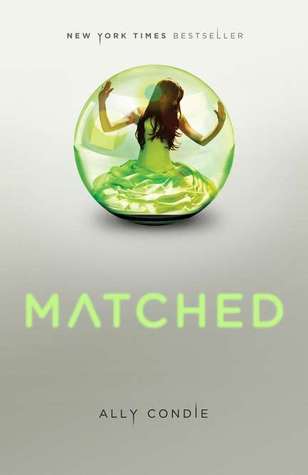
            The “Matched” series by Ally Condie is one of the thousand or so series out there for young adults or anyone who likes to read about another society created in the mind of a very clever author. In this world, “the warming” has come and the “Society” is trying to prevent the end of the world by making choices for everyone.
            The Society has chosen one hundred stories, one hundred paintings, one hundred songs, etcetera for everyone to hear and see. The Society chooses everyone’s professions, everyone’s mate and how many children everyone can have. They even choose when everyone will die.
            Cassia is satisfied with her life in this world. She is happy with her ideal chosen mate, until she sees Ky’s face flash an instant on the matching screen before fading to black. It is then that Cassia begins to question everything she has ever known.
            Is she really happy with her life? Are her parents, grandparents, neighbors, friends, happy with Society making all of their decisions for them?
            The premise of this first book, “Matched,” is engaging and promising. I read it when it was first published two years ago and awaited anxiously for the sequel which was released in November. I just got my hands on a copy of the second installment of this trilogy, “Crossed.” I read it in a few hours.
            The second book is different from the first in that it takes place outside of the Society that has been created. Cassia has chosen who she wants to be with and does her best to find him. But without the kind of “love-triangle” from the first book, there was not quite as much tension.
            What I really like about this series is that it is very clean. I could easily allow my twelve-year-old daughter to read it without being concerned about content. It is not overly intense. And there is not sexual content or innuendo.
            I really liked reading “The Hunger Games.” But I have not let my daughter read it because she gets scared easily and I think it might be a little too intense for her. The situations are dire in those books. Life seems hopeless.
            These books are less about survival of the fittest and more about having free agency. They are about making choices whether those choices are good or bad. And who determines whether a choice is a good choice or a bad choice?
            So, if you liked “The Hunger Games,” take a look at the “Matched” series by Ally Condie. I know it is always nice to find a new series to read and the final book in the series comes out in November.

Wednesday, April 4, 2012

column 15


I never learned about Japanese-American internment camps in the United States when I was a child, so it has been shocking for me, as an adult, to read about this dark period in the recent past of the United States. It is even more shocking to read that it took place not far from my current backyard.
            During World War II, people of Japanese descent who had been born and raised in the United States were put in camps, which were essentially prisons, because of their heritage and the color of their skin.
            Julie Otsuka writes about this embarrassing chapter of the history of our country in two gripping and eye-opening novels, “When the Emperor Was Divine” and “Buddha in the Attic.”
            In her debut novel, “When the Emperor Was Divine,” Otsuka portrays the life of a family that is taken by long train ride to a dusty, hot, uncomfortable camp in the desert of the American West.
            The horrifying reality for Japanese Americans during World War II was that no one trusted them. People whose parents had immigrated to the United States from Japan for a better life found themselves ostracized by their fellow Americans—people they had grown up with. Men, women, and children born in this country were put in these “camps” because of fear.
            “Buddha In the Attic” paints a portrait of Japanese mail-order brides brought to the United States in the early twentieth century to marry Japanese men who were supposed to make their dreams come true. These men sent for women, ages 10 and up, to come live with them to be their wives, to make families, and to sometimes be no more than legal slaves.
            Mothers sent their daughters to this country with the hope that they would find a better life—free from the hard physical labor and malnourishment from which they themselves had suffered—only to find that the girls were sent to fates not much better than their own.
            As the years went on, conditions improved. The children of these mail-order brides grew up learning English. They got an education. They were able to read and write. This was the reason these women sacrificed to come to this country. Maybe they were not able to better themselves, but they were able to make things better for their progeny.
            Then came the bombing of Pearl Harbor. People who had been the friends of these Japanese Americans became afraid.  Their neighbors, grocers, customers, and employers were all afraid. That was when the men started to disappear. They were taken in the night. Eventually, fear spread beyond just the men. After all, who knew what secrets the Japanese women and children were hiding?
            That is when all the Japanese, regardless of whether they were born in the United States, were taken to the internment camps in the Rocky Mountain West, where they could be “safe.” That is what the government told the American people. Children missed their playmates. Employers missed their employees. Grocers missed their customers. People missed their friends, their neighbors, their community members, and their church fellows.
            These two books opened my eyes to the problems that arise when people are afraid. We can be a devastating people. We can be an intolerant people. We can even be a cruel people.
            After reading these beautiful novels, which are based on true stories as told to Julie Otsuka, my hope is that we can be a good people. These books talk about an inexcusable part of our American past. I hope it is never part of our future.